


Recommended Products
- Bio Soluble Fiber Blanket
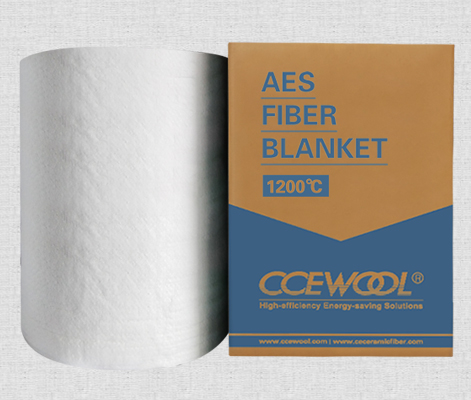 Temperature Grade: 1200°C (2192°F), 1300°C (2372°F)
CCEWOOL Bio Soluble (Low Biopersistent) Fiber Blanket is made from alkaline earth silicate and is a calcium-magnesium insulating fiber. It is referred to as a soluble fiber because it has some solubility in bodily fluids. The introduction of MgO and CaO in soluble fibers enhances their flexibility, elasticity, and provides excellent thermal and mechanical performance.
- Ceramic Fiber Modules
 Temperature Grade: 1100°C(2012°F), 1260°C(2300°F), 1400°C(2552°F), 1430°C(2600°F)
CCEWOOL ceramic fiber modules are made from spun ceramic fiber blankets and processed through precision machining and pre-compression. Each module is custom-manufactured strictly according to the customer's drawings. The modules feature a clean white appearance, uniform dimensions, and straight edges to ensure tight integration with the kiln structure, forming a seamless insulation layer u
- Ceramic fiber blanket
 Temperature Grade: 1100°C(2012°F), 1260°C(2300°F), 1400°C(2552°F), 1430°C(2600°F)
CCEWOOL Ceramic Fiber Blanket is a new type of fire-resistant insulation materials in white and tidy size, with integrated fire resistance, heat separation and thermal insulation functions, containing no any binding agent. All CCEWOOL Ceramic Fiber Blankets are made though spun fiber production, the working temperature is from 1100°C to 1430°C.
- Ceramic fiber board for boilers
 Temperature Grade: 1260°C(2300°F), 1400°C(2550°F), 1430°C(2600°F)
CCEWOOL Ceramic Fiber Board for boilers is distinguished by its lightweight construction and high compressive strength. Manufactured via automated, continuous processes with a small addition of high-purity aluminosilicate fiber binder, it offers precise large dimensions, superior flatness, excellent strength, low weight, outstanding thermal-shock resistance, and anti-spalling properties.
- Ceramic Fiber Cloth
 Temperature Grade: 1260°C (2300°F)
CCEWOOL Ceramic Fiber Cloth is a woven fabric made from our high quality ceramic fiber yarn. It is strong, lightweight, flexible, and available in a wide variety of thicknesses, widths and densities. Ceramic cloth contain absolute amount of binder material which is normally burned at lower temperature and does not affect the insulation property.
- DJM Insulating brick
 Temperature Grade: 2300°F(1260°C), 2600°F(1430°C), 2800°F(1540°C), 3000°F(1650°C), 3200°F(1760°C)
CCEFIRE DJM Series Mullite insulation brick is a new type of refractory material, which can directly contact with fire, characterized with high temperature resistance, lightweight, low thermal conductivity, good energy saving effect.
- Ultrathin 6mm Ceramic fibre blanket
 Temperature Grade: 1260°C(2300°F), 1400°C(2552°F), 1430°C(2600°F)
CCEWOOL Untral-thin Ceramic Fibre Blanket is a new type of fire-resistant insulation materials in white and tidy size, with integrated fire resistance, heat separation and thermal insulation functions, containing no any binding agent. All CCEWOOL Ceramic Fibre Ultra-thin Blankets are made though spun fiber production, which is widely used in various sectors of refractory, insulation.
- Ceramic Fiber Tape
 Temperature Grade: 1260°C?(2300°F)
CCEWOOL ceramic fiber tape is woven from high-quality ceramic fiber yarn and is available with either glass fiber or stainless steel reinforcement. It features excellent chemical stability, outstanding thermal shock resistance, and strong resistance to corrosion, mechanical vibration, and stress-induced damage.
Top articles
- Ceramic Fiber Blanket vs Ceramic Fiber Board: How to Choose for Industrial Furnace Backup Insulation?
- Ceramic Fiber Blanket Insulation for Galvanizing Annealing Furnaces
- Ceramic Cloth | High-Temperature Wrapping & Sealing Solutions | CCEWOOL
- Ceramic Insulation Blanket PUREWOOL | Better Suited for Fabrication Processing | CCEWOOL
- Ceramic Fiber Module Methods | Matching Different Furnace Structures and Project Requirements | CCEWOOL
- DJM23 Mullite Insulation Brick|January Restocking|CCEFIRE
- High-Density Molding - The Secret Behind CCEWOOL Refractory Ceramic Fiber Block’s High Rebound
- CCEWOOL participated in Ceramics Expo and achieved great success!
- CCEWOOL refractory fiber achieved great success at ALUMINUM USA 2023
- CCEWOOL refractory fiber attended Heat Treat 2023 and achieved great success
Latest articles
- Ceramic Fiber Blanket vs Ceramic Fiber Board: How to Choose for Industrial Furnace Backup Insulation?
- Ceramic Fiber Blanket Insulation for Galvanizing Annealing Furnaces
- Custom-Width Ceramic Fiber Blanket Fabrication for Heat Treatment Furnace Insulation in Spain
- Soluble Fiber Insulation Blanket | Process Heater Backup Insulation Project | Petrochemical Industry | Netherlands | CCEWOOL
- High Temperature Ceramic Insulation Blanket | Annealing Furnace Backup Insulation Fabrication Project | Heat Treatment Industry | Singapore | CCEWOOL
- Refractory Ceramic Fire Board | Batch Heat Treatment Furnace Backup Insulation Fabrication Project | Heat Treatment Industry | Czech Republic | CCEWOOL
- Ceramic Wool Blanket | Customer Repeat Order After Satisfactory Product Use | CCEWOOL
- Ceramic Fiber Aluminum Foil Blanket | Industrial Equipment & Duct Insulation Project | Thermal Processing Industry | UAE | CCEWOOL
- Refractory Ceramic Fibre Board | High-Temperature Insulation Component Processing Project | Industrial Equipment Industry | Poland | CCEWOOL
- Ecological Fiber Blanket | High-Temperature Furnace Lining & Insulation Support Project | Metallurgical Industry | U.K. | CCEWOOL
Your browsing history

How Does Ceramic Fiber Blanket Density Affect Product Selection?
Density refers to the mass of material per unit volume. For ceramic fiber blankets, it affects not only product weight but also tensile strength within the same product series and the thermal design of the installed insulation layer.
Selecting the appropriate density requires evaluating these factors against actual project requirements rather than simply choosing a lighter or heavier grade.
CCEWOOL Ceramic Fiber Blanket is available in 64, 96, 128, and 160 kg/m3 densities. By considering tensile strength, weight and thermal performance, and installation and Fabrication requirements, customers can better determine which specification suits their furnace lining applications.
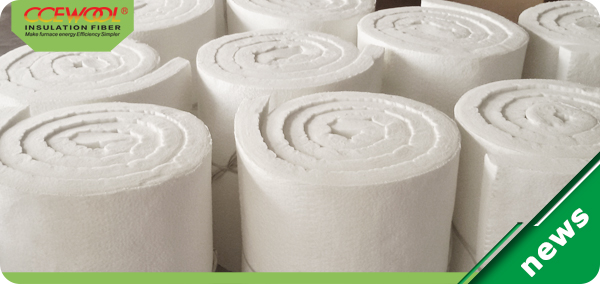
Tensile Strength Data Within the Same Series Supports Material Handling and Fabrication
Taking CCEWOOL HPS2300 Ceramic Fiber Blanket as an example, the product data sheet lists the following tensile strength values for different densities according to EN 1094-1:
64 kg/m3: 45 kPa
96 kg/m3: 65 kPa
128 kg/m3: 85 kPa
160 kg/m3: 125 kPa
Within this product series, tensile strength increases as density increases.
These data help customers compare the blanket integrity required during handling, slitting, and cutting. However, they should not be used as a substitute for evaluating material performance after prolonged exposure to high temperatures.
For projects involving frequent handling, narrow-width slitting, or batch Fabrication, specifications with higher tensile strength can help maintain blanket integrity during processing.
For lightweight backup insulation or filling applications with minimal mechanical disturbance, lower-density products can also be evaluated according to fixing and installation requirements.
Using comparable data from the same product series provides a more reliable basis for selection rather than assigning a fixed application to each density grade.
Weight and Thermal Conductivity at the Same Thickness Influence Insulation Design
At the same surface area and nominal thickness, higher-density blankets have greater mass.
For a nominal thickness of 25 mm, the calculated mass per unit area is:
64 kg/m3: approximately 1.6 kg/m2
96 kg/m3: approximately 2.4 kg/m2
128 kg/m3: approximately 3.2 kg/m2
160 kg/m3: approximately 4.0 kg/m2
These values are calculated from nominal density and thickness and provide a useful reference for preliminary comparisons of handling weight and material selection.
For large-area backup insulation or multilayer installations, differences in individual layer weight can also affect the overall installation requirements.
Beyond weight, ceramic fiber blanket insulation selection must consider thermal conductivity at the relevant density and temperature, together with the required insulation thickness.
For example, the CCEWOOL HPS2300 Ceramic Fiber Blanket data for 128 kg/m3 lists thermal conductivity values of:
400°C: 0.10 W/(m·K)
800°C: 0.20 W/(m·K)
These values demonstrate why thermal conductivity data must always be evaluated together with the corresponding temperature conditions. Other density grades require their own applicable data and should not be estimated directly from the 128 kg/m3 specification.
In practical selection, lower-density blankets can help reduce material weight, while the required insulation performance depends on both thickness and the corresponding thermal conductivity.
Tensile strength and thermal performance address different requirements. Considering both provides a more complete basis for balancing handling needs and insulation design.
Installation Conditions and Fabrication Requirements Determine the Appropriate Density
For flat-laid insulation, curved-surface wrapping, and cold-face backup insulation, material weight, surface conformity, and fixing arrangements are important considerations.
For insulation behind Ceramic Fiber Modules or in gap-filling applications, the required compression must also be confirmed.
When a ceramic fiber blanket is compressed, its installed thickness decreases and its actual density changes. Thermal performance should therefore be evaluated under the installed conditions rather than using the nominal uncompressed thickness.
For cut-to-size processing, slitting, custom-width fabrication, and flexible insulation components, material selection should also consider cutting integrity and handling strength.
64 kg/m3 can be evaluated for lightweight backup insulation with limited mechanical disturbance.
96 and 128 kg/m3 can be compared according to flexibility, tensile strength, and processing requirements.
160 kg/m3 can be considered for applications requiring higher tensile strength.
These are general selection guidelines rather than fixed relationships between density and application.
CCEWOOL offers ceramic fiber blankets in multiple densities, thicknesses, and dimensions, with custom cut-to-size Fabrication support.
The appropriate density should be selected by evaluating:
Actual Operating Temperature and Insulation Requirements + Available Thickness and Installed Conditions + Tensile Strength and Fabrication Needs
This approach helps translate density selection into product specifications suited to actual furnace lining requirements.
By combining technical product data with flexible dimensional options and Fabrication support, CCEWOOL helps customers select suitable ceramic fiber blanket specifications for their insulation projects.
leave message to apply
- Your Name :*
- Company Name:*
- Your E-mail:*
- Remarks:*


