


Recommended Products
- Bio Soluble Fiber Blanket
 CCEWOOL Bio Soluble (Low Biopersistent) Fiber Blanket is made from alkaline earth silicate and is a calcium-magnesium insulating fiber. It is referred to as a soluble fiber because it has some solubility in bodily fluids. The introduction of MgO and CaO in soluble fibers enhances their flexibility, elasticity, and provides excellent thermal and mechanical performance.
- Ceramic fiber paper
 Temperature Grade: 1260 °C (2300 °F), 1400 °C (2552 °F), 1430 °C (2606 °F)
CCEWOOL Ceramic Fiber Paper shows excellent thermal insulation properties and construction performance, suitable for use in deep processing (multi-layer composite, punching, etc.); and excellent resistance to molten infiltration, allowing itself to be used for casting washer separation in the construction and glass industries.
- Ceramic fiber square rope
 Ceramic Fiber Rope is a length of fibers, twisted or braided together to improve strength for pulling & connecting and can also be called as fibril or filament. We provide round rope, square rope and twisted rope. Both kind has two type, glass filament reinforced and stainless stainless steel reinforced.
- Ceramic Fiber Tape
 Ceramic Fiber Tapes that are fabricated using high quality ceramic fiber yarn and are reinforced with fiberglass filament & ss wire.
- Ceramic fiber blanket
 Temperature Grade: 1100°C(2012°F), 1260°C(2300°F), 1400°C(2552°F), 1430°C(2600°F)
CCEWOOL Ceramic Fiber Blanket is a new type of fire-resistant insulation materials in white and tidy size, with integrated fire resistance, heat separation and thermal insulation functions, containing no any binding agent. All CCEWOOL Ceramic Fiber Blankets are made though spun fiber production, the working temperature is from 1100°C to 1430°C.
- Ultrathin 6mm Ceramic fibre blanket
 Temperature Grade: 1260°C(2300°F), 1400°C(2552°F), 1430°C(2600°F)
CCEWOOL Untral-thin Ceramic Fibre Blanket is a new type of fire-resistant insulation materials in white and tidy size, with integrated fire resistance, heat separation and thermal insulation functions, containing no any binding agent. All CCEWOOL Ceramic Fibre Ultra-thin Blankets are made though spun fiber production, which is widely used in various sectors of refractory, insulation.
- DJM Insulating brick
 Temperature Grade: 2300°F(1260°C), 2600°F(1430°C), 2800°F(1540°C), 3000°F(1650°C), 3200°F(1760°C)
CCEFIRE DJM Series Mullite insulation brick is a new type of refractory material, which can directly contact with fire, characterized with high temperature resistance, lightweight, low thermal conductivity, good energy saving effect.
- Ceramic Fiber Cloth
 CCEWOOL Ceramic Fiber Cloth is a woven fabric made from our high quality ceramic fiber yarn. It is strong, lightweight, flexible, and available in a wide variety of thicknesses, widths and densities. Ceramic cloth contain absolute amount of binder material which is normally burned at lower temperature and does not affect the insulation property.
Top articles
- How good is thermal insulation brick for insulation?
- How much does insulation brick insulate?
- Does mullite insulation brick make good insulation?
- What is the difference between insulating fire brick and fire brick?
- Why are more boilers choosing CCEWOOL thermal ceramics modules for insulation?
- What is the lifespan of ceramic fiber modules?
- How CCEWOOL Refractory Ceramic Fiber Module Helps Metallurgical Furnaces Cut Energy Use and Maintenance Needs?
- Why More Aluminum Plants Are Choosing CCEWOOL Refractory Fiber Board for Tundish and Electrolytic Cell Insulation?
- Why Choose CCEWOOL Ceramic Insulation Board for Petrochemical Furnace Hot-Face Linings?
- What is Ceramic Fiber Back-lining Board Used For?
Latest articles
- Refractory Fiber Blanket - CCEWOOL
- How good is thermal insulation brick for insulation?
- Ceramic Insulation Board - CCEWOOL
- How much does insulation brick insulate?
- Refractory Ceramic Bulk Fiber - CCEWOOL
- Does mullite insulation brick make good insulation?
- Ceramic Blanket - CCEWOOL
- What is the difference between insulating fire brick and fire brick?
- Superwool Blanket - CCEWOOL
- Why are more boilers choosing CCEWOOL thermal ceramics modules for insulation?
Your browsing history

What is the lifespan of insulation fire brick?
In high-temperature industrial furnaces, the lifespan of insulation fire brick is always a major concern for users. Beyond thermal insulation alone, bricks must maintain long-term stability under complex operating conditions. The key lies in mechanical strength and thermal shock resistance, which directly determine whether the lining can operate safely and effectively.
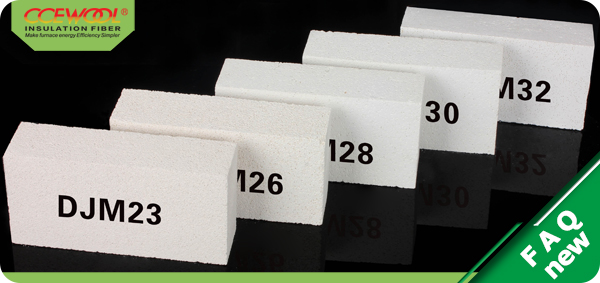
High Strength: Withstanding Mechanical Stress
During operation, furnace linings endure structural loads, gas flow erosion, and thermal expansion pressure. Without sufficient strength, cracks or breakage may occur, leading to partial collapse. CCEFIRE insulation fire brick is produced from high-purity alumina and silica, combined with high-pressure forming technology. This ensures a dense, uniform structure that provides superior mechanical strength.
Thermal Shock Resistance: Handling Rapid Temperature Changes
Industrial furnaces frequently undergo heating and cooling cycles, causing abrupt temperature fluctuations. Poor resistance to thermal shock can lead to cracking or spalling. Through advanced high-temperature sintering, CCEFIRE insulation fire brick forms a stable crystalline structure that effectively absorbs stress during rapid changes, keeping the bricks intact.
Low Damage, Long Service Life
The combination of high strength and thermal shock resistance enables CCEFIRE insulation fire brick to remain stable at high temperatures, avoiding powdering or detachment. This reduces maintenance frequency and unplanned downtime. In practice, their service life is typically 20–30% longer than that of conventional insulation bricks.
Lifespan Depends on Strength and Stability
So, what is the actual lifespan of insulation fire brick? With superior strength and thermal shock resistance, CCEFIRE insulation fire brick ensures long-lasting furnace lining performance. It outperforms traditional products in durability, making it a reliable, energy-efficient choice for high-temperature industrial applications.
leave message to apply
- Your Name :*
- Company Name:*
- Your E-mail:*
- Remarks:*


